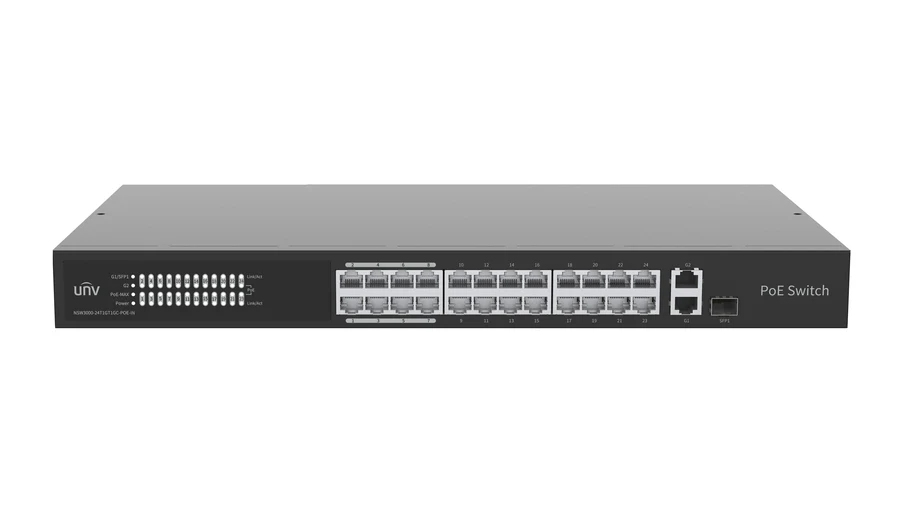
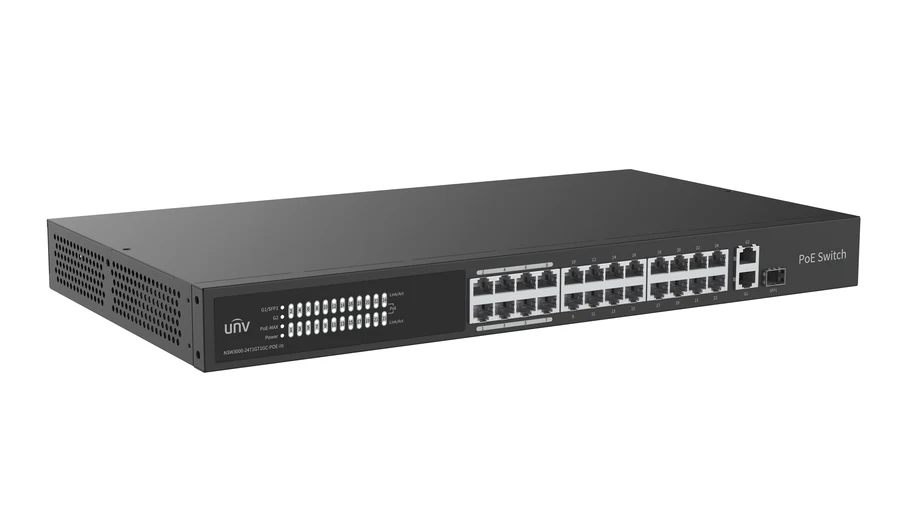
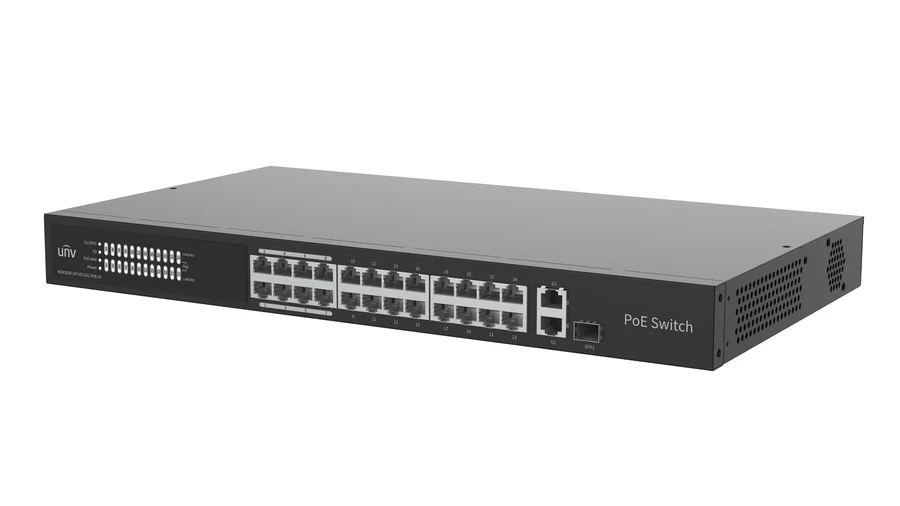
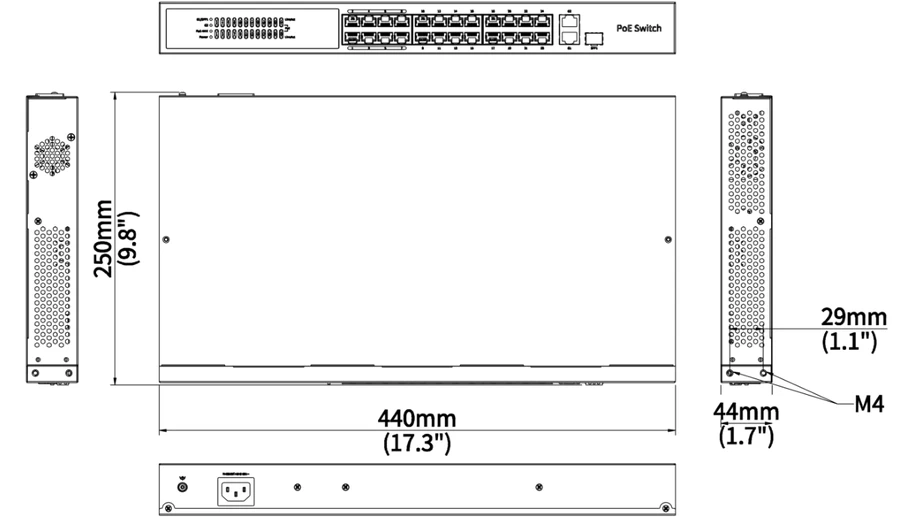
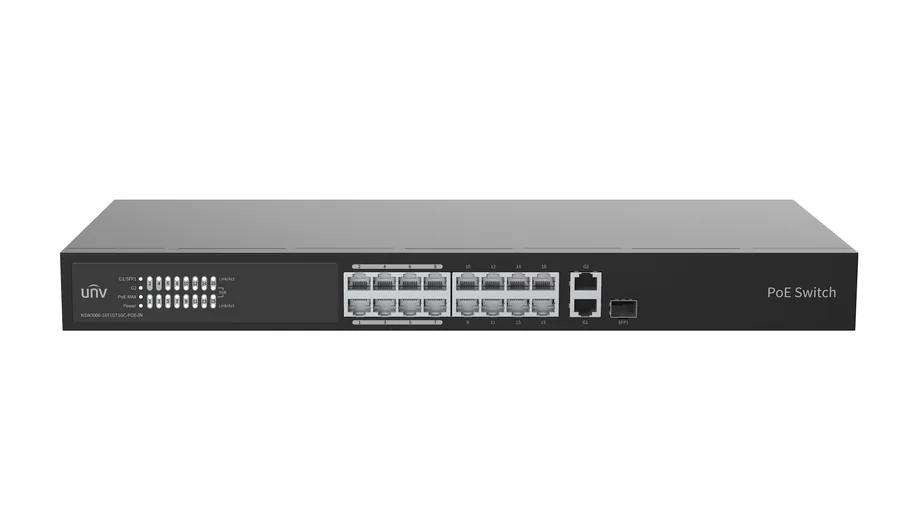
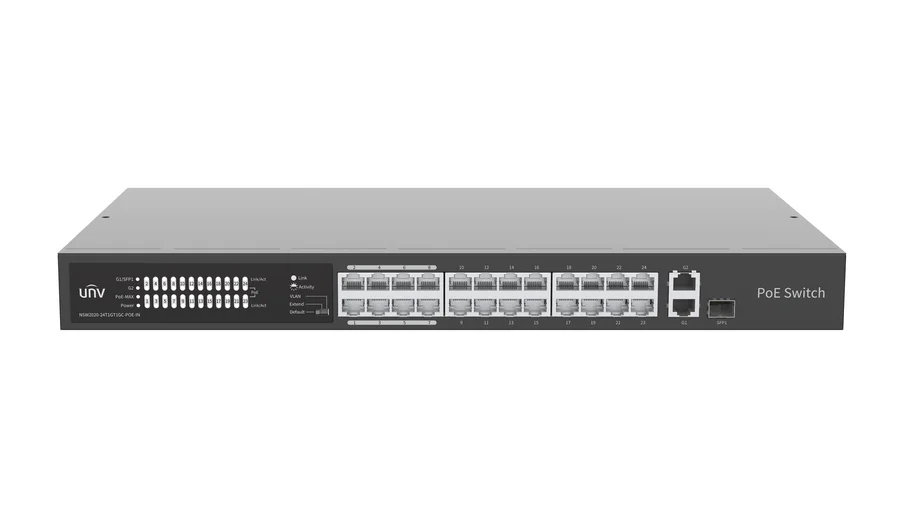
Six real deployment scenarios matched to this model's actual datasheet specifications.
Cloud Dashboard Scales Across Bigger, 24-Port DeploymentsConsolidate a full 24-camera floor, warehouse aisle or campus building segment onto one switch — the same cloud dashboard used for smaller sites still auto-discovers every device and builds one network topology, so fewer switches means fewer logins, not more.
32 VLANs Segment a Denser Port Count Without Adding SwitchesWith 24 downlink ports on a single 1U unit, VLAN segmentation (Access/Trunk, up to 32 VLANs) keeps camera traffic separated from POS, Wi-Fi and office data even as more devices, and more traffic types, land on the same box.
Remote PoE Restart Covers More Cameras Per Truck Roll AvoidedA 24-port switch puts more cameras behind one uplink; when one freezes, an admin power-cycles just that port from the Web or app instead of dispatching someone to a larger site with more equipment to check.
Loop Detection Protects Busier Wiring ClosetsBigger sites mean more patch panels and more chances for an accidental loop; built-in loop detection flags a miswired cable on any of the 24 ports immediately, before it broadcast-storms the switch serving the whole floor.
Real-Time Port Alarms Keep Pace With a Larger Camera CountMonitoring 24 ports by hand doesn't scale — port abnormal alarms report to the software the instant a link drops, so IT catches the one dead camera among two dozen without a manual walk-through.
Priority Ports 1-8 Matter More When 24 Ports Compete for a 370 W Budget24 ports at up to 30 W each can demand far more than the 370 W budget allows; ports 1-8 hold PoE power and forwarding priority, so entrance, cash-register or other critical cameras stay online first when the switch has to ration power across more devices.